Reading The Boy and the Heron
"For fantasy is true, of course. It isn't factual, but it is true." –Ursula K. LeGuin
The film is back in theaters for the first time. It feels more pertinent today than when I first viewed it in the early fall of 2023. And Steven asked me recently about the Granduncle and what his stone building blocks stained by malice mean, but as there is almost no way to professionally publish anime criticism outside of boutique indie outlets anymore, I can forego an actual introduction and keep my thesis to the end.
This is a reading.
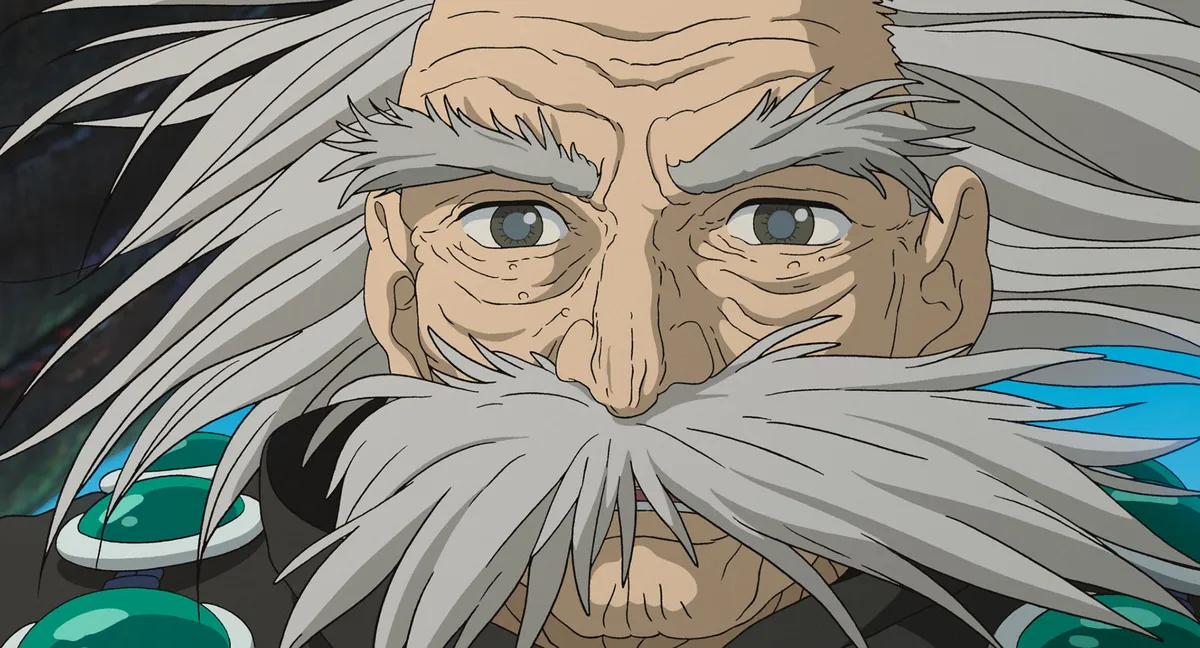
The Granduncle read too many books and went mad (lol) before disappearing in his library tower, lost in his stories. When Mahito finds him, we see he literally builds the fantastical tower world that Mahito has traversed by stacking stone blocks into precariously balanced towers over and over again. These off-white blocks are tainted by death — carved from the same rock as headstones. The towers he builds cannot support the fantasy any longer and fall in quicker and quicker succession.
At his journeys end, the Granduncle presents Mahito with pure stones (white, not inflicted by malice) and tasks him with stacking them into a new tower that will endure. This will either rebuild the world or perpetuate it, it is unclear which exactly. Either way, Mahito would inherit the tower world from his Granduncle as its creator. I’ve called the pure stones literal platonic forms — a cube with perfectly equal edges, the pyramids with faces each adding to 180° beyond measure — that, like stacking blocks, literalize the allegory. Neither platonic forms or purity can exist in the real world, but in this fantastical world, their promise has seduced the Granduncle. And Mahito refuses them. He won’t rebuild the tower world. That is the climax of his story.
Jay Castello reads Mahito's ultimate refusal to use the pure stones as breaking the tower world’s cycle of hunger and flame. Mahito refuses to perpetuate the cyclical violence he has witnessed, but he also believes his own malice, evidenced by his self harm scar, would taint the stone and strife would continue to plague the world. Jay argues that Mahito misinterprets his own grief (what spurned his act of self harm) as malice, and his ending is found in how he carries the blocks back into the real world, the world of flame, to create, build, and imagine on his own terms.
I disagree that Mahito is not inflicted by malice. Mahito inherits his malice by growing up in Imperial Japan.
Text: His desire to hurt himself is not unlike the hunger, loss, and fire the nation endures. He is bullied not simply for being the new kid, but for being the clean, comfortable, safe boy of an industrialist actively profiting off the war starving them. As his father retreated into the countryside, Mahito retreats into the tower world. Miyazaki did too.
Biography: Miyazaki’s father, like Mahito’s, ran a factory that manufactured parts for the Zero used in kamikaze attacks. In the documentary Miyazaki and the Heron, Miyazaki says the theme of the (unfinished, unwritten) movie is "Malice is embedded in the world."
Miyazaki also gets confused over what the movie is about and feels he is haunted by the ghosts of his late collaborators; Like Jay I have reservations about biographical readings. I don't think you have to know who Isao Takahata or Yasuda Michiyo are to appreciate the film, and I think most biographical readings from the hobbyist press viewed his history as a simple allegorical cipher. But reading TBATH as a semi-biographical film must go beyond Ghibli. There is context and history to its time and place that, alongside the text, argues a different theme.
The climax of the movie comes moments after Mahito’s resolve, when the Parakeet King intervenes. He takes the building blocks of a better world and misuses and destroys them. He hastily builds a world solely for himself, then, when it wobbles, slashes his sword down the tower, ripping apart the very fabric of the tower world. The Parakeet King steals what was promised to a child, tears apart literal imagination, and burns everything to the ground.
The Parakeet King is a fascist.
This is text: Signs proclaim the Parakeet King duce, he leads a flock of homogeneous carnivores, and he transforms into an annoying little bird that shits all over Mahito’s dad. And he is a product of the tainted stones and of the Granduncle's imagination.
The library was built atop a meteorite, which appears in the tower world as a floating rock with fingerprint-like striations. It is, the Granduncle says, the source of his power. It is literally alien, the power to create a new world, and it is buried beneath all the stories we already knew. Whatever the Granduncle had fled in his tower all those years ago, he did not escape. Mahito’s ultimate choice is not just to reject the tower world but to return to his own, the one where his mom dies, the one that will be consumed by fire. He has learned the limits of imagination and knows death could never be removed from the worlds he imagines.
We cannot escape fascism or empire through fiction; Their ideas fester in the very stories we seek comfort in.
Mahito returns to his world with the understanding he cannot make one free of the malice that he inherited. But what can he create? Antiwar movies? Environmentalist movies? Movies about children who did not know the rubble, but are still born of this world? A war haunts the wizarding fantasy of Howl’s Moving Castle and economic decline precedes Spirited Away, each radically altered children stories. Warlords destroy forests in Princess Mononoke and industrialists co-opt passion and pervert beauty in The Wind Rises, both critical of Japan’s colonial past.
The Boy and the Heron is a mea culpa.